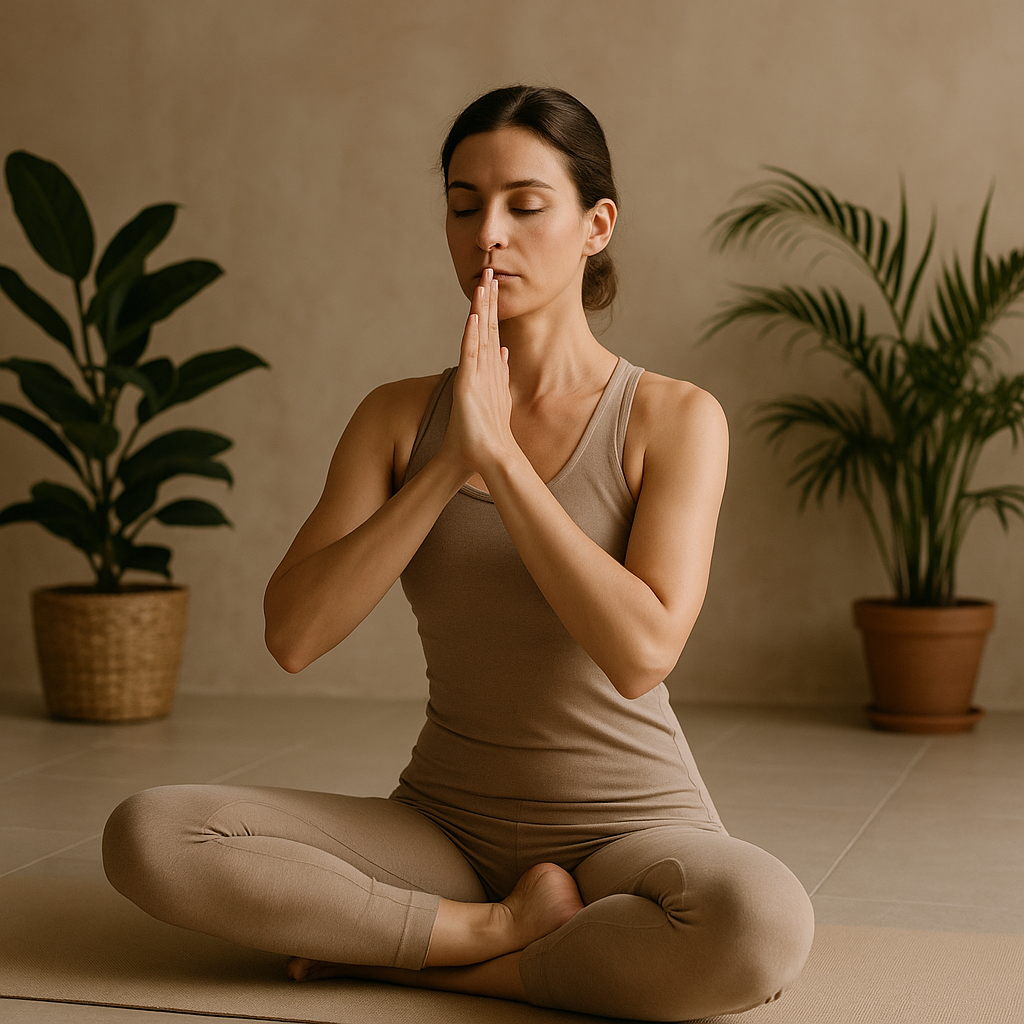
In Ayurveda and yogic science, the breath (prana) is considered the vital life force that governs the mind, emotions, and subtle energies of the body. Classical texts like Hatha Yoga Pradipika emphasize that pranayama should be practiced only when the body and mind are stable, steady, and free from tension. This is because the breath acts as the bridge between the physical body (sthula sharira) and the mind (manas).
When the breath flows smoothly, the mind naturally becomes quieter. However, in today’s overstimulated lifestyle—with screens, stress, and constant mental chatter—people often find it difficult to sit immediately for pranayama. The mind becomes restless, the body feels tight, and the breath becomes shallow.
This is why at Ayurhitam, every breathwork session begins with gentle, progressive movements and mindful joint loosening. These movements are customized according to each person’s dosha tendencies, mobility, and current energy state. By gradually preparing the physical and subtle systems, we create the ideal foundation for safe, effective, and deeply therapeutic pranayama.
Jumping straight into pranayama without preparation can limit benefits. According to Ayurveda:
Vata aggravation causes restlessness, shaky breath, and difficulty sitting still.
Pitta aggravation creates heat, irritability, and breath that feels forceful.
Kapha dominance leads to sluggishness and lack of focus.
When the body is stiff or the mind is distracted, the breath remains restricted. People may experience:
Inability to stay seated for long
Breath feeling forced or unnatural
Wandering thoughts and poor concentration
Increased tension in shoulders, chest, or abdomen
Shallow inhalation due to rigidity in the rib cage
This affects the flow of prana through the nadis and prevents deeper benefits such as improved mental clarity, emotional regulation, and nervous system balance.
Before pranayama, Ayurhitam integrates simple asana-based movements, sukshma vyayama (subtle joint rotations), and supportive mudras, all synchronized with slow, mindful breathing.
Gentle movements help:
Loosen stiff muscles
Open the chest and diaphragm
Reduce compression on the spine
This allows the breath to expand naturally without strain.
Slow stretches paired with deep exhalations activate the parasympathetic nervous system, calming:
Restlessness
Anxiety
Mental hyperactivity
This shift prepares the mind for introspection and deeper breath awareness.
Conscious movement teaches the mind to follow the rhythm of the breath. This synchrony helps:
Increase mindfulness
Improve concentration (dharana)
Bring awareness to the present moment
According to yogic anatomy, the body contains 72,000 nadis through which prana flows. Preparatory movements remove blockages and enhance the smooth movement of pranic energy, making pranayama more effective and transformative.
Once the body is relaxed and the breath is steady:
Pranayama techniques become natural, not forced
The mind settles into clarity and stillness
Stress melts away
One experiences a deeper connection with inner awareness
This is the stage where breathwork shifts from being just a technique to becoming a healing, meditative, and deeply rejuvenating experience.

Passionate to empower people with Ancient Ayurvedic Knowledge. Protect your digestive fire. Clinical Pharmacist turned Ayurvedic Practitioner.




#spices to rescue 6 tastes abhyanga aidyourdigestion ayurveda ayurvedicanswertocorona ayurvedicherbs Ayurvedic oil massage ayurvedictreatment Bay Area wellness beatcorona Benefits of oil massage buildimmunity buildyourimmunity corona corona treatment covid-19 covid-19pandemic dailyroutine doityourself exercise food health healthy living herbsandhealth holistichealer Holistic health holisticmedicine immunity indianherbs indianspices insomnia meditation Natural immunity natural treatment for chronic headaches naturalways natural wellness over come anxiety peace quarantinelife rasayana sleep slowdown treat corona with ayurveda wellness


Comments are closed